The short version
- For a local contractor, Facebook and Instagram are mostly proof. People check your feed to see whether you’re active, real and good at the work before they call.
- You don’t need to be clever. Before-and-afters, jobs in progress, short walkthrough videos, your crew and your reviews cover most of what you’ll ever need to post.
- Consistency beats volume. A few solid posts every week for a year does more than a burst of daily posting that dies in a month.
- Every post should make the next step easy: a service page link in your bio, quick replies to messages, and a phone number people can tap.
Ask a room full of Southwest Florida contractors how they feel about social media and you’ll get a lot of sighs. Most of them know they should be posting. Few of them know what to post, and almost none of them have time to sit around thinking about it after a ten-hour day in the sun.
Here’s the good news: the best content for a contractor is already happening every day on your job sites. You just need a simple way to capture it and a short list of post types to rotate through. This guide gives you both.
First, know what social media is for
For most trades, Facebook and Instagram aren’t where strangers go when they need a contractor today. Those people search Google. Social media does a different job:
- It’s proof. When someone hears your name from a neighbor or sees you on Google, they often check your social pages next. A feed full of recent jobs says “busy, real, local.” A page that hasn’t posted since 2023 raises questions.
- It keeps you top of mind. Past customers, neighbors and referral partners see your work and remember you when they need you or when a friend asks.
- It feeds your ads. If you run Facebook or Instagram ads, your best-performing organic posts are often your best ad creative.
If you’re wondering whether a social page can replace a website, we covered that in Do You Need a Website If You Have a Facebook Page? The short answer is that they do different jobs and work best together.
The 8 types of posts that work for contractors
You don’t need a content calendar full of holidays and memes. Rotate through these and you’ll never run out of things to post.
1. Before-and-after photos
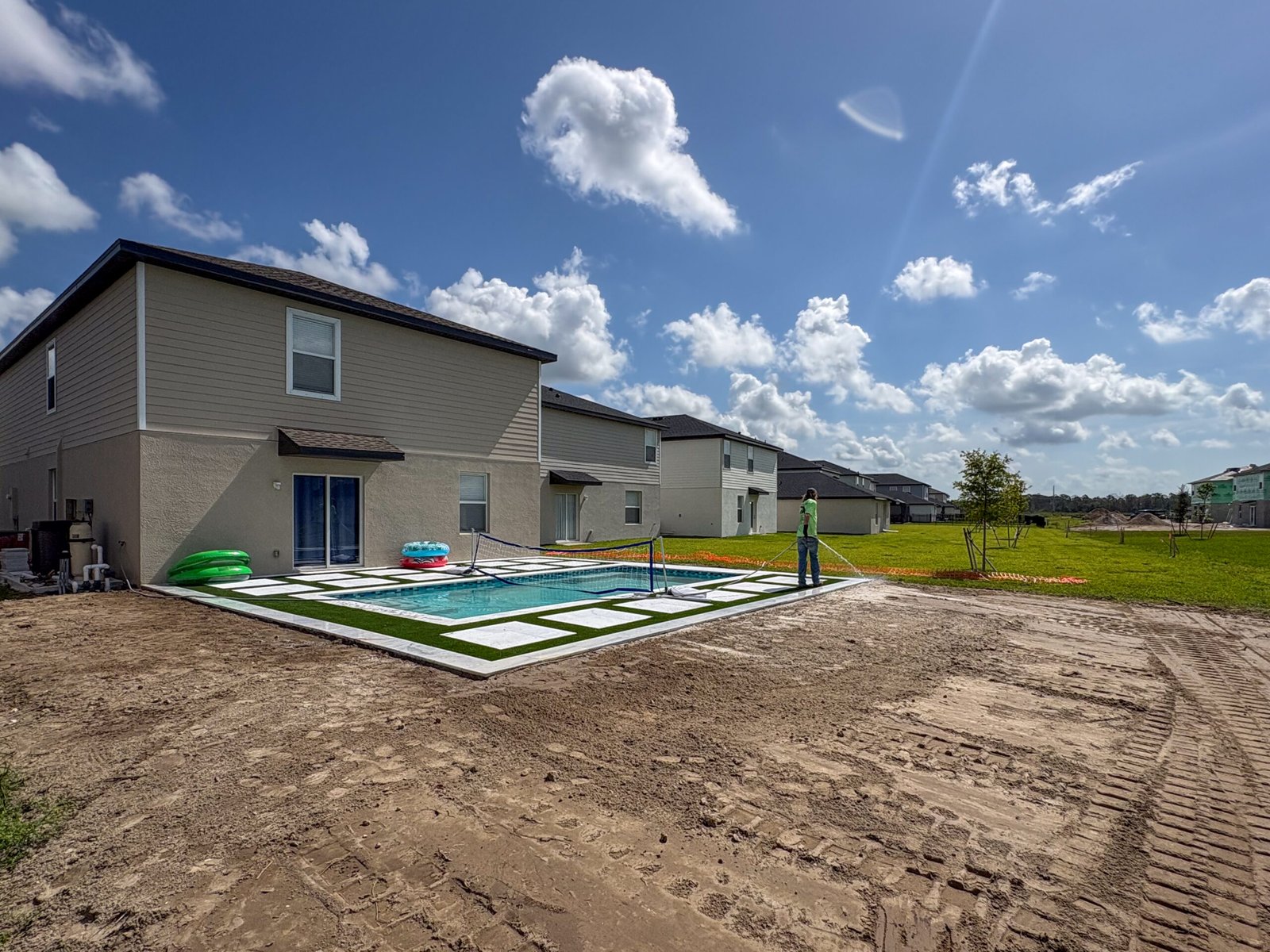
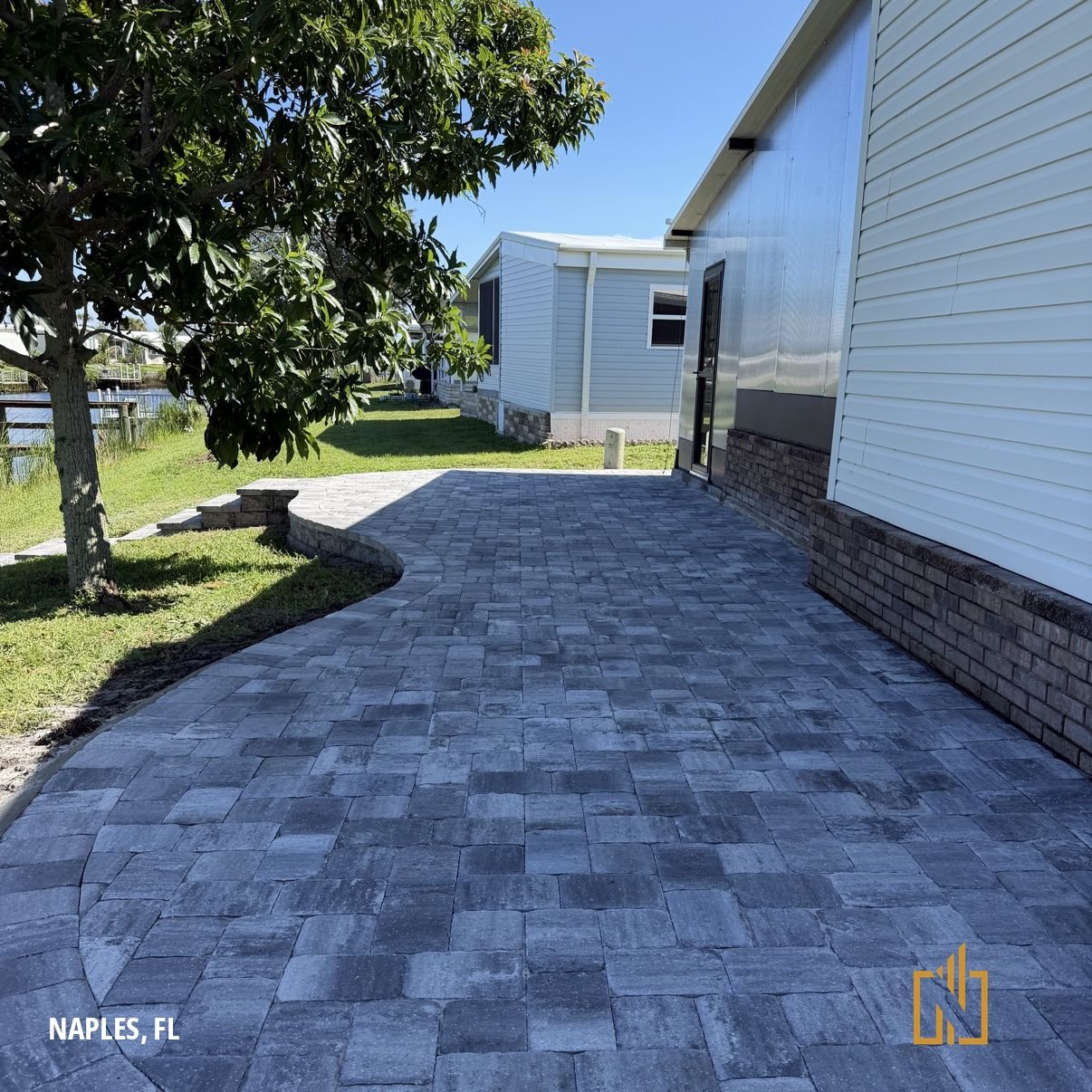
This is the best post a contractor can make. A cracked, stained driveway next to a finished paver driveway tells the whole story in one swipe. Take the “before” from the same spot and angle you’ll use for the “after,” and shoot both in decent light. A carousel post with the before first and the after second lets people swipe to the reveal.
For an example of a contractor that leads with its finished work, look at NexElite Pavers & Landscaping, a paver and landscape design company serving Naples to Sarasota. It’s a Roll The Six client and is owned by one of Roll The Six’s co-founders. Its website features a “Recent Outdoor Transformations” gallery of pool decks, driveways, patios and walkways and links out to its Facebook, Instagram and TikTok pages, so a visitor can go from the finished work to the social feed and back.
2. Jobs in progress
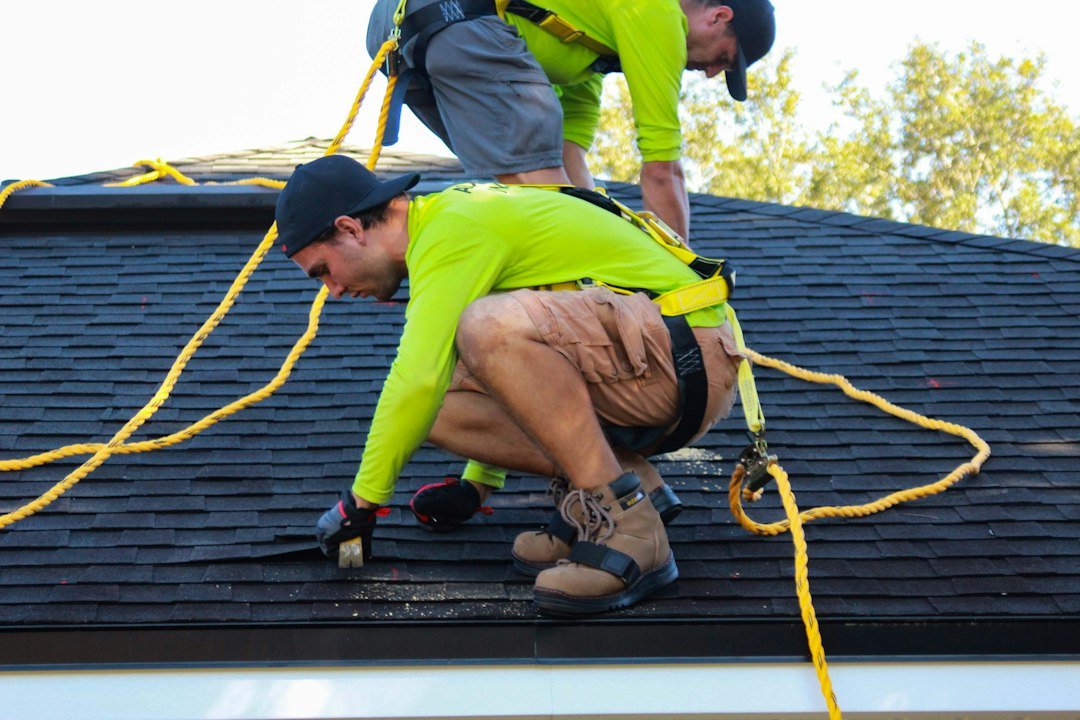
People are fascinated by how things get built. Base prep, forms, tear-off, pouring, laying, wiring, setting equipment. These posts show that you do the work the right way, including the steps nobody sees once the job is done. A quick caption like “Day 2 on this Cape Coral pool deck: compacting the base before a single paver goes down” is all it takes.
3. Short walkthrough videos
Hold your phone vertically and walk the finished job for 15 to 60 seconds while you talk about what you did. You don’t need music, graphics or a script. Instagram now allows Reels up to three minutes, but shorter is usually better for a walkthrough. Real voices from real job sites tend to come across as more trustworthy than polished ads.
4. Meet the crew
Homeowners are letting strangers onto their property. Showing the people who’ll show up, with a name and how long they’ve been with you, takes some of the worry out of that. Ask your crew first; not everyone wants to be on camera.
5. Customer reviews
Turn a great Google review into a simple graphic, or share it with a photo of that job. It puts proof in front of people who may never read your Google profile. Get the customer’s okay before you pair their review with a photo of their home.
6. Quick answers to common questions
Every trade has questions customers ask over and over. “How long do pavers last?” “Should I seal my pavers?” “How often should I service my AC?” Answer one per post in a few sentences or a short video. These posts show you know your stuff, and they make good material for your website too.
7. Local and seasonal posts
Southwest Florida has its own rhythm. Hurricane prep in early summer, rainy-season reminders, snowbirds coming back in the fall, boat season, holiday lighting. Tie your service to what’s happening locally. Our article on getting your business ready for snowbird season has ideas for the winter months.
8. Behind the scenes
New equipment, a loaded trailer at 6:30 a.m., a supply run, a team lunch after a big job. These posts are low effort and remind people there’s a real business behind the logo.
A simple weekly plan
If you want structure, here’s a rhythm a busy owner can actually keep. Treat it as a starting point and adjust to what your followers respond to.
| Day | Post | Time it takes |
|---|---|---|
| Monday | Job in progress from last week, with the city in the caption | 5 minutes |
| Wednesday | Short walkthrough video or a quick answer to a common question | 10 minutes |
| Friday | Before-and-after of a finished job | 10 minutes |
| Anytime | Stories: crew, trucks, behind the scenes, a review | A minute here and there |
Three feed posts a week plus a few stories is plenty for most contractors. If that’s too much, two good posts a week, every week, is still far better than nothing.
How to capture content without slowing down the job
The hardest part isn’t knowing what to post. It’s remembering to take the photo. A few habits fix most of that:
- Make one person responsible on each crew for a before, a during and an after on every job.
- Shoot more than you need. A dozen photos and a couple of short clips per job gives you plenty to pick from later.
- Use a shared album so photos from every phone land in one place.
- Shoot vertically for video and get both vertical and horizontal photos of finished work so you have options for every platform. Instagram’s profile grid now shows posts in a taller 3:4 shape, so leave a little room around your subject.
- Clean up first. Move the trash cans, hoses and tools out of the shot before the “after” photo.
Writing captions that bring in calls
Captions don’t need to be long. A good contractor caption usually does three things:
- Says what the job was and where. “Travertine pool deck in Punta Gorda” is more useful to a local reader than “Another beautiful project!”
- Adds one detail that shows expertise. Why you chose that material, what you fixed under the surface, how long it took.
- Makes the next step obvious. “Call or message us for a free estimate” with your phone number.
One Florida-specific note: section 489.119 of the Florida Statutes requires licensed contractors to include their certification or registration number in advertisements, as defined by the licensing board’s rules. Putting your license number in your bio and on any boosted or paid post is a simple habit that keeps you on the safe side. Ask your attorney if you’re unsure how it applies to your trade.
What not to post
- Customer addresses or house numbers, license plates, or the faces of homeowners and their kids without permission.
- Stock photos passed off as your work. Customers notice, and it undercuts the whole point of posting.
- Complaints about customers, other contractors or inspectors. Even if you’re right, it reads badly.
- Prices you can’t stand behind. Every job is different. Say “starting at” only if you really mean it.
- Nothing but promotions. If every post is a sale, people tune out.
Turning posts into leads
Posting builds trust. These steps turn that trust into calls:
- Put a real link in your bio, pointing to a specific service page on your website, not just your home page.
- Answer messages fast. Many people would rather send a Facebook or Instagram message than call. A reply hours later often loses the job. If messages and missed calls keep slipping through, set up automatic lead follow-up so every inquiry gets an immediate response.
- Boost what’s already working. When a post gets more likes, comments and shares than usual, that’s a sign it could work as an ad to homeowners in your service area. Our guide to Facebook ads for local service businesses explains how to do that without wasting money.
- Repurpose your best photos on your Google Business Profile and website gallery. One good job photo can work in three places.
If you’d like to go beyond organic posts, Roll The Six runs Facebook and Instagram ad campaigns for contractors and service businesses around Southwest Florida. And if your social posts are sending people to a website that doesn’t hold up, a quick website health check will show you where visitors are getting stuck.
Contractor social media checklist
- ☐ Facebook and Instagram profiles list the same business name, phone number and service area as your Google Business Profile
- ☐ License number in your bio
- ☐ Bio link points to a specific service page
- ☐ One person on each crew owns before, during and after photos
- ☐ A shared photo album everyone uploads to
- ☐ A simple weekly rhythm you can actually keep (even two posts a week)
- ☐ Captions that name the job, the city and the next step
- ☐ Permission from customers before showing their home, face or review
- ☐ Messages answered the same day, ideally within the hour
- ☐ Best-performing posts reused on your website and Google profile
The bottom line
You don’t need to become a content creator to win on social media. You need to show your work, regularly, in a way that makes people trust you before they call. Snap the before, the during and the after on every job, post a few times a week, answer your messages quickly, and give people an easy way to reach you. Do that for a year and your feed will be doing a lot of your selling for you.