The short version
- Powersports customers buy with their eyes. Finished builds, clear photos and short videos do more selling than any slogan.
- Your Google Business Profile is the front counter for “UTV shop near me” searches. Fill in every service, every brand you work on, and keep photos fresh.
- Make the quote step easy: ask for year, make, model and the work they want, then reply fast by text.
- Repair and maintenance pay the bills between big builds. Market both, and give each its own page.
Running a powersports shop is a strange mix of businesses under one roof. Part of your week is routine service: oil changes, belts, diagnostics, a dirt bike that won’t idle. The other part is custom work that customers dream about for months before they spend a dime: lifts, wheels, light bars, full builds. Each side brings in a different customer, and each needs to be marketed a little differently.
This playbook is for owners of side-by-side, ATV, dirt bike and off-road truck shops in Southwest Florida who want a steadier flow of the right jobs without throwing money at things that don’t work. None of it requires a big budget. Most of it requires doing a handful of basics consistently.
Start with what makes powersports different
A homeowner calling an AC company wants the problem gone. A rider calling your shop usually wants something better than what they have. That changes how people shop for you:
- They research before they call. Riders look at builds, compare shops, and ask in groups and forums. By the time they reach out, many already know what they want.
- They care who has worked on their brand. A Can-Am owner wants to know you have done Can-Ams. A KTM rider wants to see bikes, not just side-by-sides.
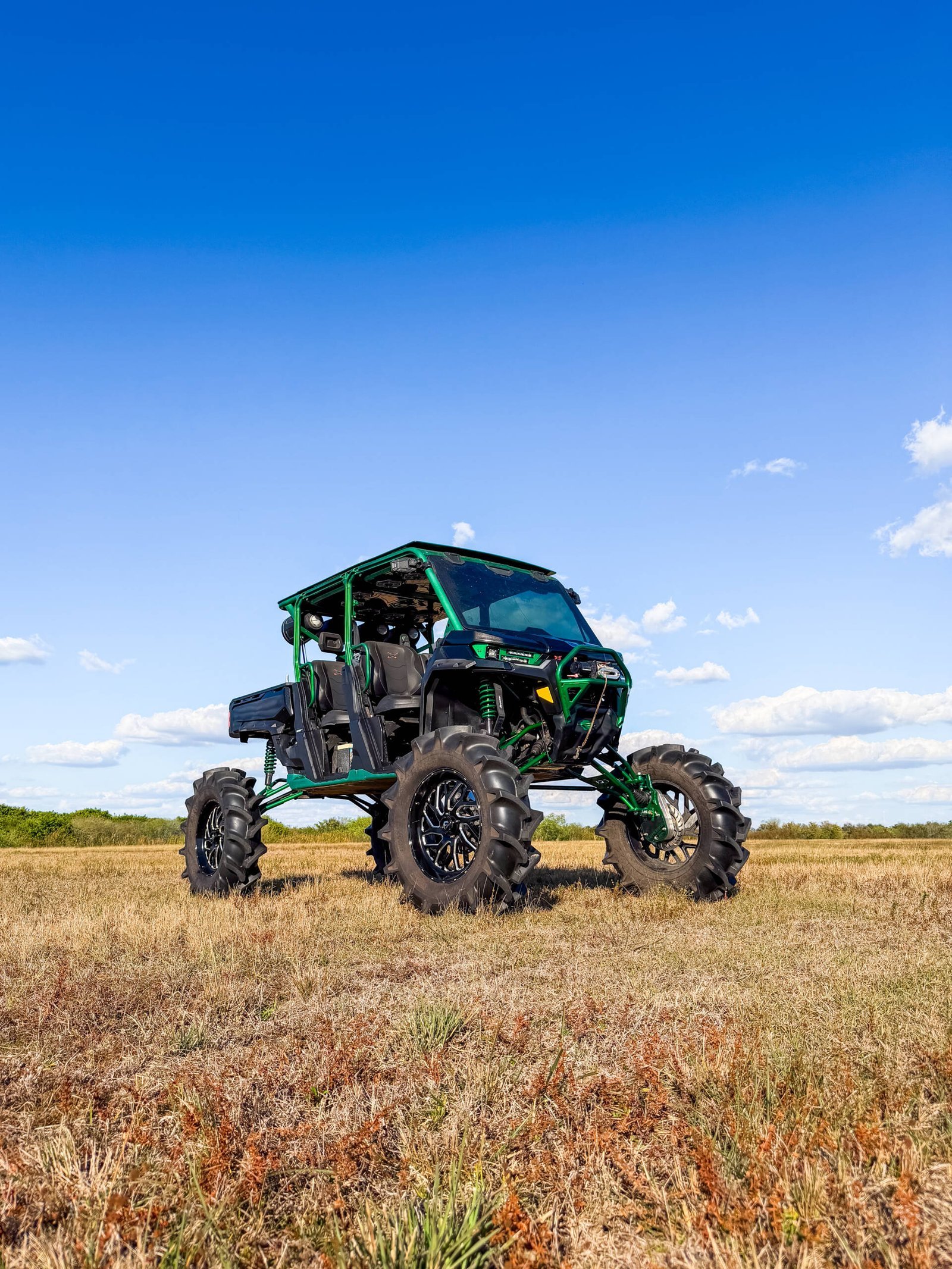
- They judge by finished work. A clean photo of a lifted machine on new wheels and tires answers more questions than a paragraph about “quality craftsmanship.”
- They talk to each other. Riding is social. A happy customer shows the build to everyone at the trail, the boat ramp or the parking lot.
Every tactic below leans into those four facts.
Your Google Business Profile is your front counter
When someone types “UTV repair near me” or “side by side lift kit Punta Gorda,” the map results are often the first thing they see. That map listing is your Google Business Profile, and for a shop that depends on local customers it may matter as much as your website.
What to fill in
- Primary category that matches your main line of work, plus secondary categories for the other work you really do.
- Services list with each type of work spelled out: maintenance, diagnostics, suspension, lift kits, wheels and tires, audio, LED lighting, custom builds.
- Business description that names the vehicle types and brands you service in plain language.
- Hours that are accurate, including holidays. Nothing burns trust faster than a customer driving out to a locked door.
- Photos of the shop, the team and, most of all, finished work. Add new ones regularly as builds roll out.
Our Google Business Profile setup guide walks through each field step by step. If you would rather hand the listing, reviews and local search work to someone else, Roll The Six manages Google profiles and SEO for local shops.
Reviews that mention the work
Reviews help you show up and help you close. The most useful ones mention the machine and the job: “lift and tires on my Defender,” “diagnosed my RZR when two other shops couldn’t.” You can’t write reviews for customers, but you can ask at the right moment, which is usually when they see the finished machine for the first time. Hand them a card with a QR code to your review link, or text it the same day. For more on how many you need, see How Many Google Reviews Do You Need to Rank Locally?
Build a website that shows the work and makes quoting easy
Your website has two jobs: prove you can do the work, and make it painless to start a job. Most shop sites fail at the second one.
Give each service its own page
A single “Services” page with a bulleted list won’t rank well and won’t answer anyone’s questions. Separate pages for service and repair, lifts and suspension, wheels and tires, audio and lighting, and custom builds let you explain what is involved, which brands you work on, and show photos of that specific kind of job. Each page also gives Google a clear signal about what you do.
A builds gallery that does the selling
A gallery of finished machines is the single most persuasive page a custom shop can have. Label each build with the make and model and a sentence about what was done. Over time, that gallery becomes proof that you have handled the exact machine a visitor owns.
A quote form that asks the right questions
Keep it short, and ask for what you need to price the job: year, make and model, what they want done, and the best way to reach them. Let people attach a photo. Then explain what happens next so nobody wonders whether the form went into a black hole.
If your current site is slow, hard to use on a phone, or missing these pieces, our article on why a website gets traffic but no calls covers the usual culprits.
A real example: how Superior Offroad lays it out
Superior Offroad, a Roll The Six Marketing client, is a custom off-road and powersports shop on Airport Road in Punta Gorda. Its site is a useful model for a few reasons.
- Services are split by type of work. The site lists service and repair, lifts and suspension, wheels and tires, audio and LED lighting, and custom builds as separate offerings, with dirt bike work covered too.
- Brands are named outright. It lists Can-Am, Polaris, Honda, Yamaha, Kawasaki and KTM, plus trucks, so a rider knows right away whether their machine fits.
- The builds gallery leads. Recent work includes Can-Am Defender, Kawasaki Teryx and Polaris RZR builds.
- The process is spelled out. Customers send a quote request or call with the year, make, model and work they want. The estimate comes back by text or email to approve from a phone. For builds, a parts deposit locks in the order, and drop-off is scheduled around when the parts arrive. Each machine gets a quality check and test drive before pickup.
That last point is worth copying. Explaining the process up front heads off the most common customer worries (how much, how long, when do I bring it in) before anyone picks up the phone.
Social media: show the build, not the brand
Powersports is one of the few trades where customers actively want to see your work on their feeds. Use it.
| Platform | What works for a shop | Keep it simple |
|---|---|---|
| Finished build photos, before-and-after carousels, short Reels of a machine rolling out | Good light, clean background, tag the brand | |
| Build posts, local groups, shop updates, event photos | Answer comments and messages the same day | |
| TikTok | Quick clips: first start after a build, a suspension flex test, a sound system demo | Vertical video, no editing needed |
| YouTube | Longer walkarounds of a full build | One solid video a month beats ten rushed ones |
A few habits make a big difference:
- Shoot every finished machine before it leaves the lot. Ask the customer if you can tag them.
- Capture the “before.” Customers love a transformation, and a stock machine next to the finished one tells the whole story.
- Write the specifics. “Portal lift, new wheels and tires, light bar on a Defender” is more useful than “Another sick build!”
Paid ads: start small and aim at intent
If you want to add ads, start where buying intent is highest. Google Search ads put you in front of people searching for repair or a specific upgrade right now. Facebook and Instagram ads work better for showing off builds to riders in your area who aren’t searching yet but might be tempted. Our comparison of Google Ads vs. Facebook Ads explains the difference, and the Facebook ads guide for local service businesses covers setup.
Two cautions for shop owners:
- Don’t advertise what you can’t schedule. If the bays are booked out, ads just create frustrated callers.
- Send ad traffic to the matching page. A lift kit ad should land on your lifts page, not your homepage.
Whatever you run, check the results monthly. Count calls and quote requests, not just clicks, and cut anything that isn’t producing real conversations.
Follow-up is where shops quietly lose money
Big custom jobs often take a few conversations before a customer commits. Riders get a quote, think about it, talk to a buddy, and come back weeks later, or they don’t come back at all because nobody followed up.
- Answer quote requests fast, ideally the same business day. A text reply is fine and often preferred.
- Follow up on open quotes after a few days with a simple check-in, not a hard sell.
- Text back missed calls. If you’re under a machine and can’t answer, an automatic text saying you’ll call back keeps the lead from dialing the next shop.
- Remind past customers about routine service. The rider whose machine you lifted is a strong candidate for their next maintenance visit.
Roll The Six sets up this kind of automatic lead follow-up for shops that are too busy turning wrenches to chase every inquiry by hand.
Don’t forget the bread-and-butter work
Custom builds get the likes, but maintenance and repair keep the lights on between big jobs. Treat them as their own marketing line:
- Give service and repair its own page, with the brands you work on and how to book.
- Post the occasional “what we’re seeing in the shop” tip, like checking belts or keeping up with fluid changes after hard riding.
- Make sure your Google profile mentions repair and diagnostics, not just builds, so you show up for those searches too.
The same customer who trusts you with an oil change is the one who comes back for a lift kit.
Your powersports marketing checklist
- ☐ Google Business Profile has the right categories, a full services list, accurate hours and recent photos.
- ☐ A simple routine for asking happy customers for a review the day they pick up.
- ☐ Separate website pages for each service type, each naming the brands you work on.
- ☐ A builds gallery labeled by make and model, updated as work rolls out.
- ☐ A short quote form asking for year, make, model and the work wanted, with photo upload.
- ☐ A plain-English “how it works” section covering estimates, deposits and drop-off.
- ☐ Every finished machine photographed (and filmed, if possible) before it leaves.
- ☐ Quote requests answered the same business day, with a follow-up on open quotes.
- ☐ Missed calls get an automatic text back.
- ☐ Ads, if you run them, point to matching pages and pause when the schedule is full.
Not sure which of these your shop is missing? A quick marketing health check is a good place to start. And if you run a boat shop as well as land toys, our marine shop marketing playbook covers the water side.